Rodent Removal in Seminole Heights
Seminole Heights pairs pre-war bungalows with an oak canopy that touches the rooflines, and that combination puts roof rats into attics every citrus season. The inspection is free and the phone is answered 24 hours a day.
- Free attic inspection
- Historic roofline exclusion
- FDACS-licensed contractors only
Seminole Heights housing was built before anyone thought about rat-proofing
The Seminole Heights historic district was built between 1912 and 1928, and Old Seminole Heights as a whole has a median build year of 1965 with about 30 percent of its homes dating from before 1950. The stock is Craftsman bungalows and Florida cracker houses: wood frame, deep eaves, exposed rafter tails, gable vents with the original screen, and soffits that were open boards or thin panels long before anyone specified steel mesh. Every one of those details is an opening larger than the quarter inch UF/IFAS gives as the rat-proofing standard.
Where a bungalow sits on piers with a low crawl space, there is a ground-level route as well, which the slab-built stock in the rest of Hillsborough County does without. That means an inspection in Seminole Heights covers two levels: the roofline for roof rats coming off the canopy, and the skirting and perimeter for anything working from below. The roof rat is still the animal in nearly every call here. Roof rat removal on a hundred-year-old house is a roofline job with an extra look underneath.
The oak canopy is the road onto the roof
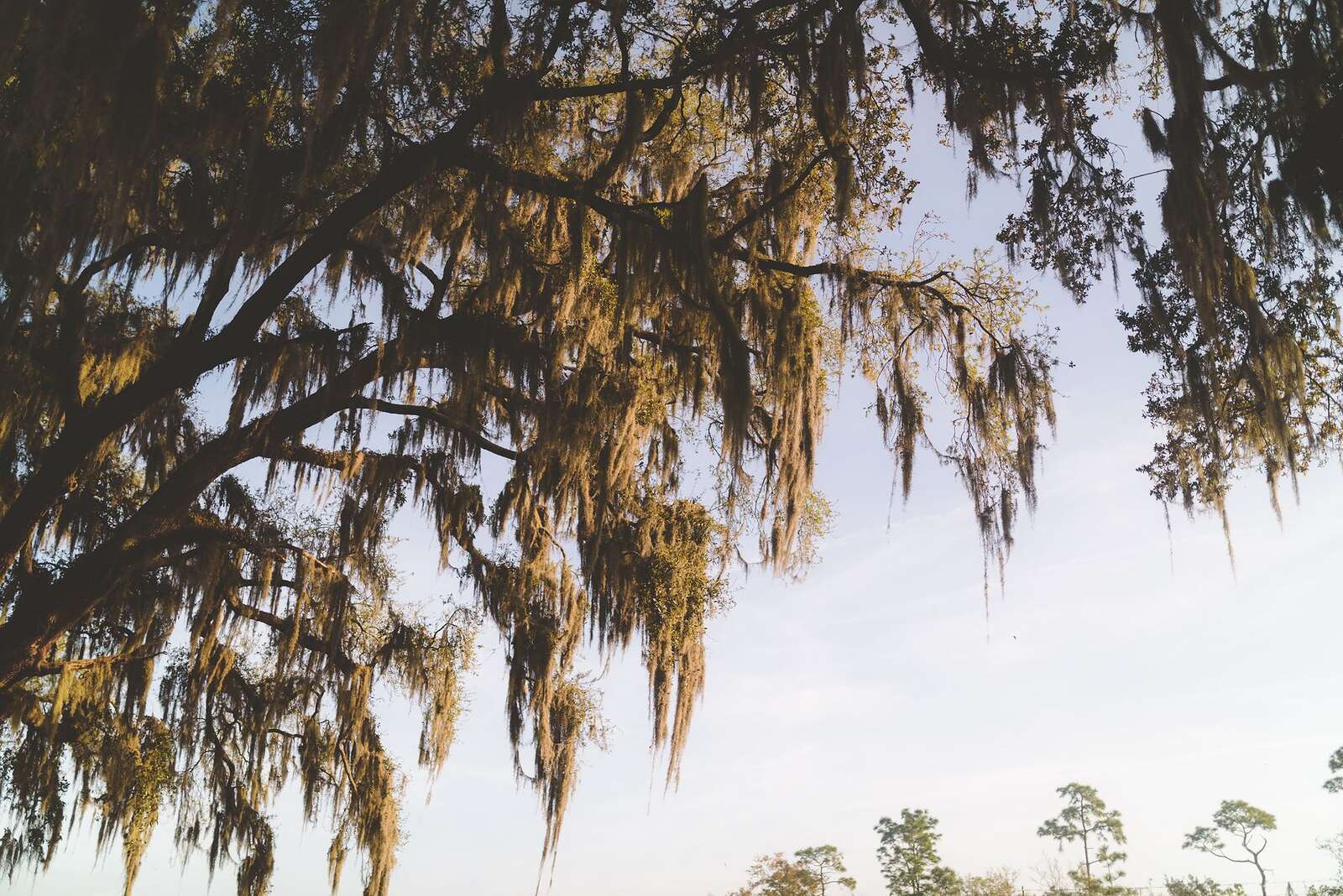
Roof rats reach Seminole Heights attics by walking. UF/IFAS describes the species as arboreal, moving along tree limbs, overhead wires and palm trunks, and the oaks here have had a century to grow over the houses, so a limb resting on a shingle roof is the norm on many blocks. From that limb a rat steps onto the roof, follows the eave to a gable vent or a gap at a rafter tail, and is in the attic without ever touching the ground. The neighborhood nickname for the animal, tree rat, is accurate.
The canopy is also why removing one rat rarely settles anything. A roof rat travels around 150 yards from its den for food and water according to UF/IFAS, and in Seminole Heights that radius takes in a dozen yards, several fruit trees and every roof the oaks touch. Cutting the tree down is almost never the answer. Pruning limbs back off the roofline removes the bridge, and some homeowners fit sheet-metal collars around trunks that stand alone. The house itself still has to be closed, because the next rat will find another way up.
Hollowed oranges in the yard mean rats on the roof
Seminole Heights yards carry a lot of citrus, and the citrus rat earned its name here. The season runs from September to March, and the sign is unmistakable once you know it: an orange or grapefruit with a neat hole chewed in the side and the inside eaten out, left hanging or dropped under the tree. Attic calls across Tampa peak in that same window and on the cool snaps between November and February, when a rat that has been feeding in the yard all fall moves into the insulation to keep warm.
The breeding never stops in this climate. UF/IFAS gives roof rats a gestation of 21 to 23 days and litters of five to eight, so by the time hollowed fruit appears in January the population on the property has usually been there since the summer rains pushed it toward the house in June or July. The tell is a reason to book the free inspection early in the season. Picking up fallen fruit and pruning citrus off the fence line reduces the food supply, and the sealing does the rest.
Old soffits and gable vents are where the sealing happens
Exclusion on a Seminole Heights bungalow concentrates on the gable vents, the soffits and the rafter tails. The original gable screens are light wire or, after a renovation, plastic, and both fail. Board soffits open up at the joints and at the corners where the fascia returns. Exposed rafter tails on a Craftsman leave a bay between each pair that a thin panel or nothing at all closes. Add the chimney flashing on the houses that have one, and the AC line set that was cut through the wall decades after the house was framed.
- Gable vents rescreened with steel hardware cloth behind the louvers
- Soffit joints and fascia returns closed with steel mesh, then trimmed to match the house
- Rafter tail bays blocked so the eave reads the same from the street
- Utility and AC penetrations packed with steel wool and sealed
- Crawl space skirting screened where the house sits on piers
The sequence is inspection, trapping, sealing, follow-up, and the order matters on an old house. Sealing first with animals inside puts a dead rat in a wall cavity, and old plaster walls are hard to open. The traps stay in at least a week, since roof rats are suspicious of anything new in their run. Rodent exclusion then closes every opening on the list with metal. Foam is what a low quote usually means, and it is gone by the next citrus season.
Storm damage on an old roof opens new doors
Helene and Milton in the fall of 2024 opened rooflines all over Tampa, and Tampa Bay pest firms reported a surge in rodent calls afterward as wind damage exposed new roof and soffit entry points and displaced rats moved into houses. The same thing was reported after Ian in 2022 and Irma in 2017. A pre-war bungalow with a limb across the roof takes that damage at the eave first, exactly where the exclusion work was done, so a house that was sealed before the storm is worth checking again after it.
Flooding adds a health dimension. The CDC ties increases in leptospirosis cases to hurricanes and floods, names rodents among the reservoirs, and recommends rodent control as part of post-flood prevention. A post-storm rodent inspection walks the roofline and the crawl space after a named storm and lists what changed. Debris piles left at the curb for weeks are harborage, so the sooner they go the better.
What to check before a contractor starts on your bungalow
Check the license first. Trapping rats or mice in, on or under a structure for hire requires at minimum an FDACS Limited Commercial Wildlife Management certificate, and any rodenticide use or general pest work requires an FDACS Commercial Structural Pest Control business license with a certified operator in General Household Pest and Rodent Control. Every contractor we route carries the credential that covers the work quoted. Confirm it through the FDACS license lookup before work starts and ask whoever attends to show it.
Then check the quote. It should separate trapping, exclusion, any attic cleanup and any ongoing monitoring into their own lines, state how many follow-up visits are included, and describe the exclusion warranty in writing: how long it runs, whether it renews, and what happens if a rat gets back in. The bands below are typical-job figures confirmed at the free inspection, Tampa figures from Angi and national figures from HomeGuide.
| Item | Typical band | Source |
|---|---|---|
| Rodent removal, per visit | $441 to $1,716 (average $1,078) | Angi, Tampa |
| Exclusion sealing | $550 to $1,642 | Angi, Tampa |
| Attic insulation removal | $600 to $1,200, replacement adds $1,000 to $3,000 | Angi, Tampa |
| Standalone inspection | $0 to $175 | HomeGuide, national |
| Dead rodent removal | $150 to $500 | HomeGuide, national |
Weeks of scratching above the bed wear people down, and being told by friends that it is nothing makes it worse. A written plan with a start date, an end condition and a price for each part is how that stops. Read more about how the routing works on the about page, or go straight to the contact page. The phone is answered 24 hours a day.
A representative gable vent screening on a Seminole Heights bungalow
A gable vent on a 1920s bungalow keeps its wooden louvers and gets a new layer behind them. The contractor removes the rusted original screen from the attic side, fits steel hardware cloth with openings under a quarter inch across the whole frame, and fastens it to the framing so nothing can be pushed in from outside. From the street the vent looks exactly as it did. The same visit closes the soffit joints along that gable with mesh trimmed behind the boards, and the limb that was resting on the roof above it is pruned back so the route to the vent is gone as well.
Why mice keep coming back
A look at the openings that make it repeat.
Video: EASY WAY to Get Rid of Mice in Your House FOREVER, from Silver Cymbal.
Why Seminole Heights homeowners book through us
Sealing first on a hundred-year-old roofline
A bungalow built in the 1920s has more openings than a block house built in the 2000s, and closing them is the whole job. The contractor we route lists every gable vent, soffit joint, rafter bay and penetration on the first visit, traps the attic for at least a week, and then closes each opening with steel hardware cloth or sheet metal to the quarter-inch standard. Trapping without that step is the practice homeowner forums complain about most.
UF/IFAS: openings closed to a quarter inch for rat-proofing
The credential the job needs, looked up before the first visit
Rat trapping in a Florida structure for hire needs at minimum an FDACS Limited Commercial Wildlife Management certificate, and rodenticide work needs a structural pest control business license with a certified operator. Every contractor we route holds the credential the job needs, and the FDACS lookup lets you confirm it in a minute. Ask whoever attends to show it at the door and to say which credential covers the work they are quoting.
FDACS Limited Commercial Wildlife Management certificate or structural pest control business license
Tampa price bands published before the quote
Angi's Tampa data gives rodent removal a per-visit average of $1,078 in a typical range of $441 to $1,716, and exclusion at $550 to $1,642. Those bands are confirmed at the free inspection, and a Seminole Heights bungalow with a long eave and several gable vents will sit toward the upper part of the exclusion band. Knowing that before the quote arrives is the difference between a fair number and a guess.
Angi Tampa: rodent removal average $1,078 per visit
A common Seminole Heights call
The situation: A 1920s Craftsman bungalow under a live oak whose lowest limb rests on the rear slope of the roof. In January the owner starts finding oranges on the ground with a hole in the side and the inside gone, and at the same time something begins running above the ceiling of the sleeping porch after midnight. A friend says it is squirrels and to ignore it. The owner has been awake at 2am for a week.
What gets done: The free inspection follows the limb to the roof and finds the rear gable vent with its original screen rusted through, droppings a quarter to half an inch long with pointed ends on the attic floor below it, and a gap at the soffit corner where the fascia returns. Snap traps go in along the top plate for ten days. The gable vent is backed with steel hardware cloth, the soffit corner and two rafter bays are closed with mesh, and the limb is cut back off the roof. The crawl space skirting is checked and found intact.
How it turns out: Four roof rats are taken in the first week, then nothing. The follow-up visit collects the traps, checks the seals and finds the insulation under the vent soiled in one area, which the owner has removed and replaced as a separate line item. The porch ceiling is silent by February, and the hollowed oranges stop appearing.
Seminole Heights rodent questions
These are the questions that come up most often on calls from Seminole Heights.
Old houses and old trees
Do I have to cut down the oak?
Almost never. The limb that rests on the roof is the bridge, and pruning it back so nothing touches the roofline removes that bridge while the tree keeps its shade. Roof rats also travel along utility wires and fence lines, and UF/IFAS puts their range at about 150 yards from the den, so a neighboring yard can supply the food while your attic supplies the nest. That is why the sealing settles it and the pruning only helps. A Seminole Heights oak is a large part of what the house is worth, and it can stay.
Why do the rats come back every winter?
Because the openings were never closed and the season repeats. Citrus ripens from September to March, the cool snaps arrive between November and February, and a rat that fed in the yard all fall moves into the attic when the temperature drops. If a previous job trapped the attic and stopped there, the next season's rats found the same gable vent or soffit gap. Exclusion with steel mesh and metal closures is what ends the cycle, and a written warranty on that work is what you ask for.
The work
Is it safe to do exclusion before trapping?
Sealing everything with rats still inside is the wrong order. A rat sealed into an attic or a wall cavity will die there, and dead animal odor inside a plaster wall on a 1920s house is a hard problem to reach. The usual sequence on a Seminole Heights bungalow is to inspect, set traps for at least a week while leaving the active runs open, then close every opening once the attic is quiet, then come back to confirm. Ask whoever attends to explain the order they plan to use and why.
What does rodent removal cost in Seminole Heights?
Angi's Tampa figures put rodent removal at a per-visit average of $1,078, typically $441 to $1,716, with exclusion sealing at $550 to $1,642 and attic insulation removal at $600 to $1,200. A pre-war bungalow with several gable vents, board soffits and a crawl space has more openings than a block house, so expect the sealing to sit in the upper half of that band. The free inspection turns the bands into a figure for your house, with each part of the job priced on its own line.
Still have a question? Call (813) 710-4931 and ask.

Book a free inspection in Seminole Heights
The phone is answered 24 hours a day. Tell us about the noise, the fruit or the droppings, and the contractor we route will walk the roofline, the attic and the crawl space and price each part separately.