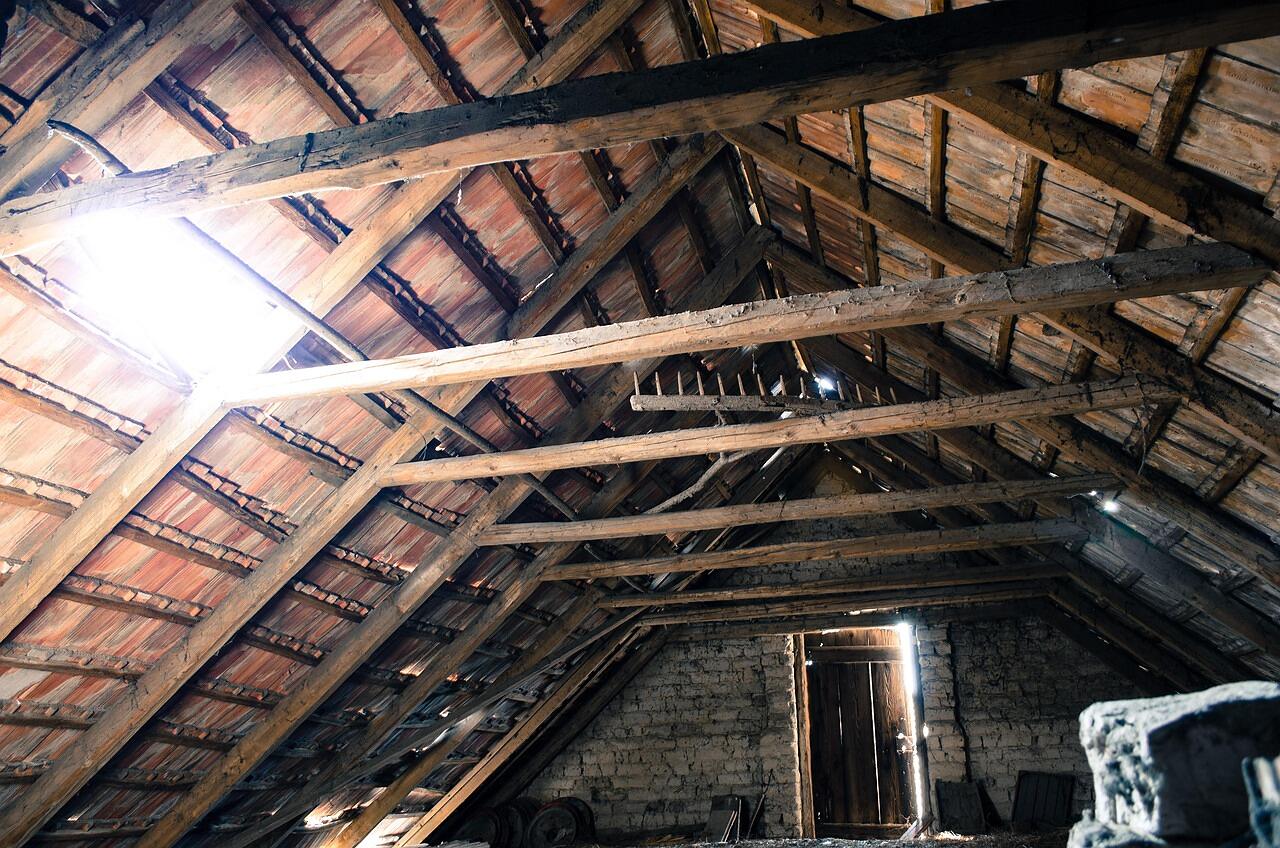
Attic Cleanup and Decontamination in Tampa, FL
Droppings, urine-soaked insulation and nest material come out, the attic gets sanitized and treated for odor, and the work is scheduled after the rats are gone and the roofline is sealed. Free inspection across Tampa and Hillsborough County.
- Free attic inspection
- FDACS-licensed contractors only
- Answered 24 hours a day
What attic cleanup and decontamination includes
Attic cleanup removes what the rats left behind: droppings, urine-soaked insulation, nest material, chewed debris and the odor that clings to all of it. Trapping and sealing get the animals out. This service deals with the attic they lived in.
A full job runs in a fixed order. Contaminated insulation is bagged or vacuumed out through the hatch with a commercial vacuum and a hose run, so the material leaves the house without being carried through the living space. Droppings on joists, decking, ductwork and the top plates of walls are removed by hand and vacuum. Exposed surfaces are then treated with a sanitizing product, and an odor treatment follows where urine has soaked into wood. Where insulation has been stripped, the attic is left ready for new insulation, which is priced as its own line.
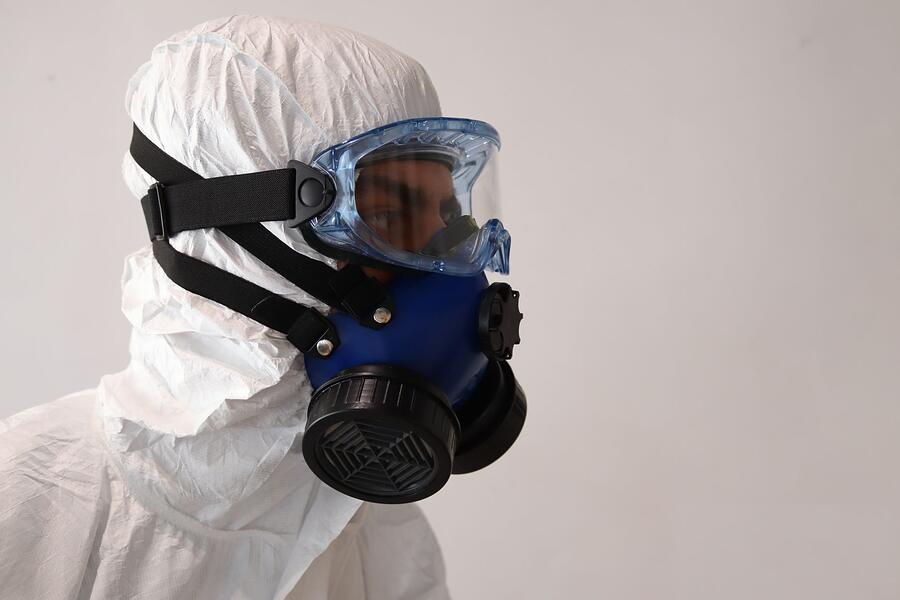
Whoever attends wears a respirator and a disposable suit for the removal stage. That is standard practice for any job involving animal waste and disturbed insulation. Fiberglass fibers, dust and dried droppings all go airborne the moment someone starts pulling material, and the protection is for that.
- Removal of droppings from joists, decking, ducts and wall plates
- Bagging or vacuum extraction of soiled and nest-contaminated insulation
- Removal of nests, food caches (hollowed citrus is common in Tampa) and chewed debris
- Sanitizing treatment on exposed framing and surfaces
- Odor treatment on urine-soaked wood
- A written note of chewed wiring, ducts or damage found during the work
Signs an attic needs decontamination
The clearest sign is droppings in quantity, and in Tampa they are almost always roof rat droppings: UF/IFAS describes them as a quarter to half an inch long, shaped like a banana with pointed ends. A few scattered pellets near the hatch mean an animal passed through. Droppings concentrated along a joist run, piled in a corner, or layered under the insulation surface mean the attic was a home.
The other signs are things you can see and smell from the hatch without going in.
- A sharp ammonia smell that gets stronger on hot afternoons, which is urine in the insulation warming up under the roof deck
- Insulation compressed into runs or tunnels, where rats have traveled the same route for months
- Dark greasy streaks along rafters and the tops of walls, from fur oil rubbed along a regular path
- Nest pockets of shredded insulation, paper or palm fiber, often against a warm duct or near the water heater flue
- Hollowed oranges or other citrus carried into the attic during the September to March fruit season
- A musty smell in the rooms below, or a smell from supply vents when the air handler runs
Living under this is a strain. Months of scratching overhead, then the discovery of what the attic looks like, leaves many homeowners feeling the house has been taken from them, and being told by friends that a few rats are no big deal makes it worse. Getting the attic back to clean is a large part of getting that feeling back, and the free inspection tells you how bad it is before you spend anything.
Why cleanup follows exclusion and trapping
Cleanup goes last because a sanitized attic with an open soffit gap gets recontaminated within weeks. The professional sequence is exclusion first, trapping until the attic is quiet, then cleanup. The contractor we route holds to that order because paying for decontamination twice is the most avoidable expense in the whole job.
Exclusion means the roofline is closed with materials rats cannot chew, to the UF/IFAS rat-proofing standard of a quarter inch: steel mesh at soffit returns and gable vents, metal bird stops along tile eaves, sealed penetrations where AC line sets and cables enter. Trapping then removes the animals that were already inside. UF/IFAS advises leaving traps in place at least a week, because roof rats are wary of new objects, and a severe infestation can take longer to trap out. Only when the traps have gone quiet does it make sense to strip the insulation and treat the attic.
There is a second reason for the order. Cleanup is the loudest, most disruptive part of the process, with a vacuum running for hours and people moving across the joists. Doing it while animals are still inside scatters them into wall voids and other parts of the house. Doing it after sealing and trapping means the attic is empty when the work starts and stays empty when it is finished. The exclusion page covers the sealing work in detail.
What the CDC says about how rodent diseases spread
The CDC states that rodents are known to carry many diseases, which reach people directly, through contact with urine, droppings and saliva or through a bite, and indirectly, through fleas, ticks and mites that have fed on an infected rodent. That is the whole of what the CDC says on the point, and it is the reason nobody should be sweeping an attic dry or handling insulation without gloves and a respirator.
The disease most often used to frighten homeowners about attic droppings is hantavirus, and the Florida picture deserves a plain statement. The identified reservoir in Florida is the native cotton rat, an outdoor field species that lives in grassland and brush, and most US cases are in the western states. The roof rat in a Tampa attic is a different animal. So the respirator and suit worn during cleanup are general contamination practice, appropriate for any accumulation of animal waste and disturbed fiberglass, and they should be worn on that basis. Anyone selling attic cleanup in Tampa on the strength of a hantavirus scare is selling the wrong reason.
The real reasons are ordinary. Dried droppings break into dust when disturbed. Urine-soaked insulation carries bacteria and a strong ammonia load. Mites and fleas that lived on the rats remain in the nest material after the rats are trapped out, and a thorough cleanup removes their habitat along with everything else. The odor treatment matters for a further reason: rodents follow scent trails, and a urine-marked attic reads as home to the next rat that finds a gap.
Full removal, spot cleaning and fogging compared
Three levels of cleanup get quoted in Tampa, and which one fits depends on how much of the insulation is contaminated.
Full removal and decontamination
Full removal takes out all the insulation, cleans the exposed framing and decking, sanitizes and deodorizes, and prepares the attic for fresh insulation. This is the answer when droppings are spread across the attic, urine has wet large areas, or nests have been built into the insulation. It is the most expensive option and the only one that resets the attic.
Spot cleaning
Spot cleaning removes droppings and contaminated insulation from the areas rats used and leaves the clean remainder in place. It fits a short infestation caught early, where activity was confined to one run or corner. A contractor who quotes spot cleaning should walk you through the attic on the inspection and show you where the contamination stops.
Fogging or spraying alone
Fogging applies a sanitizing product over the insulation without removing anything. On its own it leaves droppings and wet insulation in place under a treated surface. It has a role as the final step after removal, and it is a poor substitute for removal where contamination is real. A quote that consists only of a fogging treatment for an attic with visible droppings and compressed runs deserves a second opinion.
| Approach | What it removes | Fits when |
|---|---|---|
| Full removal | All insulation, droppings, nests, then sanitize and deodorize | Widespread droppings, wet insulation, long infestation |
| Spot cleaning | Contaminated areas only | Short infestation confined to one area |
| Fogging alone | Nothing; treats surfaces in place | Final step after removal, or very light contamination |
Will you clean up and decontaminate, or only trap?
Both, in that order, and the two are priced as separate lines. This question comes up constantly among homeowners comparing quotes, because many companies trap and seal and leave the attic exactly as they found it. Ask it before work starts. A quote that covers trapping and exclusion and says nothing about the attic means the droppings and soiled insulation stay.
Whether cleaning is enough or the insulation has to come out is decided in the attic. Insulation that rats have traveled through is compressed into runs, and the Department of Energy notes that compressed insulation does not deliver its rated R-value and that wet insulation performs poorly. Where the runs are limited and the material is dry, spot removal and sanitizing can leave the rest in place. Where urine has soaked in, or nests have been built into it, the affected insulation comes out and the replacement is quoted on top.
How long does it usually take to get rid of rats and clean the attic?
Most Tampa jobs run two to four weeks from the first visit to a finished attic, with the cleanup itself taking one day in a typical single-story home. The waiting is in the middle. HomeGuide puts trapping a small number of animals at two to three days and a severe infestation at one to two months, and cleanup is scheduled only once the traps have stopped catching.
The cleanup day itself depends on attic size, how much insulation is coming out and how hot it is. A crew working a 1,500 square foot attic with full removal will usually finish in a day. In summer, Tampa attics reach temperatures that limit how long anyone can work up there, so the contractor we route schedules removal for early morning and may split a large attic over two mornings. That is a scheduling matter, and a contractor should tell you at the inspection how many visits the plan involves.
What attic cleanup and decontamination costs in Tampa
A national attic cleanup and decontamination job runs $600 to $2,500 according to HomeGuide's 2026 figures, and Angi's Tampa data puts attic insulation removal at $600 to $1,200 with replacement adding $1,000 to $3,000. These are typical-job bands. The free inspection produces the actual number for your attic, with cleanup, insulation and any exclusion work each priced on its own line.
| Item | Typical band | Source |
|---|---|---|
| Attic cleanup and decontamination | $600 to $2,500 | National, HomeGuide 2026 |
| Attic insulation removal | $600 to $1,200 | Tampa, Angi |
| Insulation replacement (added to removal) | $1,000 to $3,000 | Tampa, Angi |
| Dead rodent removal, if needed | $150 to $500 | National, HomeGuide 2026 |
The factors that move a quote within those bands are the ones you would expect.
- Attic size in square feet, which sets the labor and the volume of material to remove
- How much of the insulation is contaminated, which decides spot cleaning against full removal
- Access: a tight hatch in a closet ceiling versus a walk-up or a garage pull-down stair
- Blown insulation versus batts, since blown material vacuums out faster
- Whether ductwork, wiring or decking has been chewed and needs a separate trade
- Disposal volume, since contaminated insulation is bagged and hauled
Tampa attics: vented, hot, and under the oaks
Nearly every Tampa house is slab-on-grade with a vented attic, and that shapes the cleanup in two ways. First, the attic is where the rats were, because there is no basement or crawl space for a roof rat to prefer and the soffit, gable, ridge and off-ridge vents give the arboreal roof rat a way in from a branch or a palm. Second, a vented attic under a Florida roof runs very hot from May to October, which is why summer cleanup gets scheduled for early morning and why a crew in respirators and suits works in shifts.
The neighborhoods that generate most of the cleanup work are the ones with canopy: Seminole Heights, Tampa Heights, Hyde Park, and South Tampa and Ballast Point, where live oaks and Spanish moss touch the rooflines of pre-war and mid-century houses. Older attics in those districts often carry layers of insulation added over decades, and the bottom layer is where the droppings have settled. Newer block and stucco subdivisions in New Tampa, Westchase and Riverview see less canopy pressure, and their cleanup jobs tend to be shorter infestations that came in at a soffit or ridge gap.
Storms add a seasonal pattern. After Helene and Milton in 2024, Tampa Bay pest firms reported a run of rodent calls as broken tiles, lifted soffits and debris piles opened new routes in and displaced rats from flooded ground. The CDC ties rises in leptospirosis cases to hurricanes and floods, names rodents among the reservoirs, and recommends rodent control as part of post-flood prevention. An attic that took rats in during a storm season is a cleanup candidate by the following spring, and a post-storm inspection catches it earlier.
What to check on the contractor before cleanup starts
Confirm the FDACS credential first. Trapping rats in, on or under a structure for hire in Florida requires at minimum an FDACS Limited Commercial Wildlife Management certificate, and a company applying rodenticide or running a general pest operation needs an FDACS Commercial Structural Pest Control business license with a certified operator in General Household Pest and Rodent Control. Every contractor we route holds the FDACS credential the job needs. Confirm it yourself through the FDACS license lookup before work starts, and ask for proof of insurance while you are at it.
Then look at the quote. It should itemize trapping, exclusion, cleanup and any insulation replacement as separate lines with the square footage stated, so you can compare it against another bid on the same scope. Ask whether the cleanup price includes disposal, whether it covers sanitizing and odor treatment or only removal, and what the contractor will do about chewed wiring or ductwork found during the job. Ask about warranty terms on the exclusion work that precedes cleanup: how long it runs, whether it renews, and how many follow-up visits are included if something gets back in. More about how the connection works is on the about page, and the contact page has the phone line and the form.
Services that usually go with this one
Most jobs in Tampa run as a sequence, and these are the pages that describe the steps around this one.
- Attic Insulation Replacement: Taking out compressed, urine-wet insulation and blowing in fresh material.
- Rodent Exclusion: Closing the roofline: soffit returns, vents, tile eaves and penetrations, to the quarter-inch standard.
- Dead Rodent Removal: Finding and removing the carcass behind the odor, then closing the opening.
Questions about how the pieces fit together are answered on the about page, or by phone at any hour.
Clearing droppings from an attic
How contaminated material is taken out.
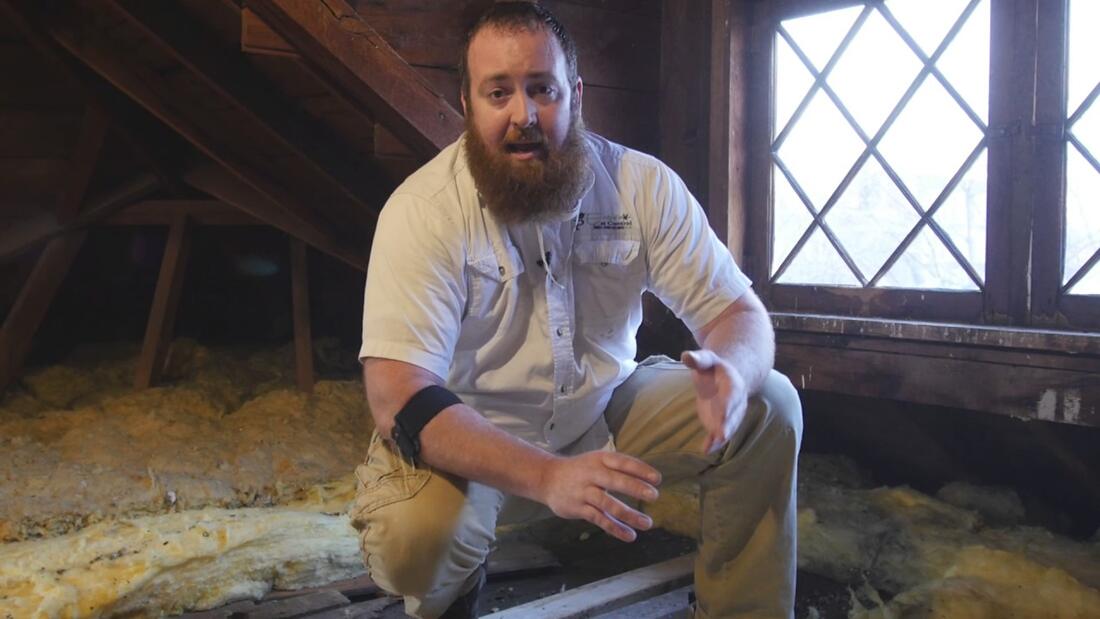
Video: How to Clean Up Animal Droppings In Your Attic, from Erdye's Pest Control.
How an attic cleanup job runs in Tampa
The order is fixed: seal the roofline, trap out the animals, then clean the attic.
-
Free inspection and attic map
Whoever attends walks the attic with a light, photographs the droppings, runs and wet areas, and checks the roofline for the openings that let the rats in. You get a written scope with cleanup priced on its own line.
-
Exclusion first
Soffit returns, gable vents, tile eaves and utility penetrations are closed with steel mesh, metal bird stops and sealant to the quarter-inch standard. Nothing gets cleaned until nothing can get back in.
-
Trapping until the attic is quiet
Snap traps go on the runs and stay at least a week, since roof rats avoid new objects. Trapping continues until several consecutive checks come back empty.
-
Removal, sanitizing and odor treatment
Contaminated insulation, droppings and nests are vacuumed or bagged out through the hatch. Exposed framing is sanitized and urine-soaked wood is treated for odor. In summer this is an early-morning job.
-
Insulation and a follow-up check
Where the old material was taken out, fresh insulation goes back in to the depth the quote specifies. A return visit some days later checks that the traps have stayed empty and that every closure is still tight.
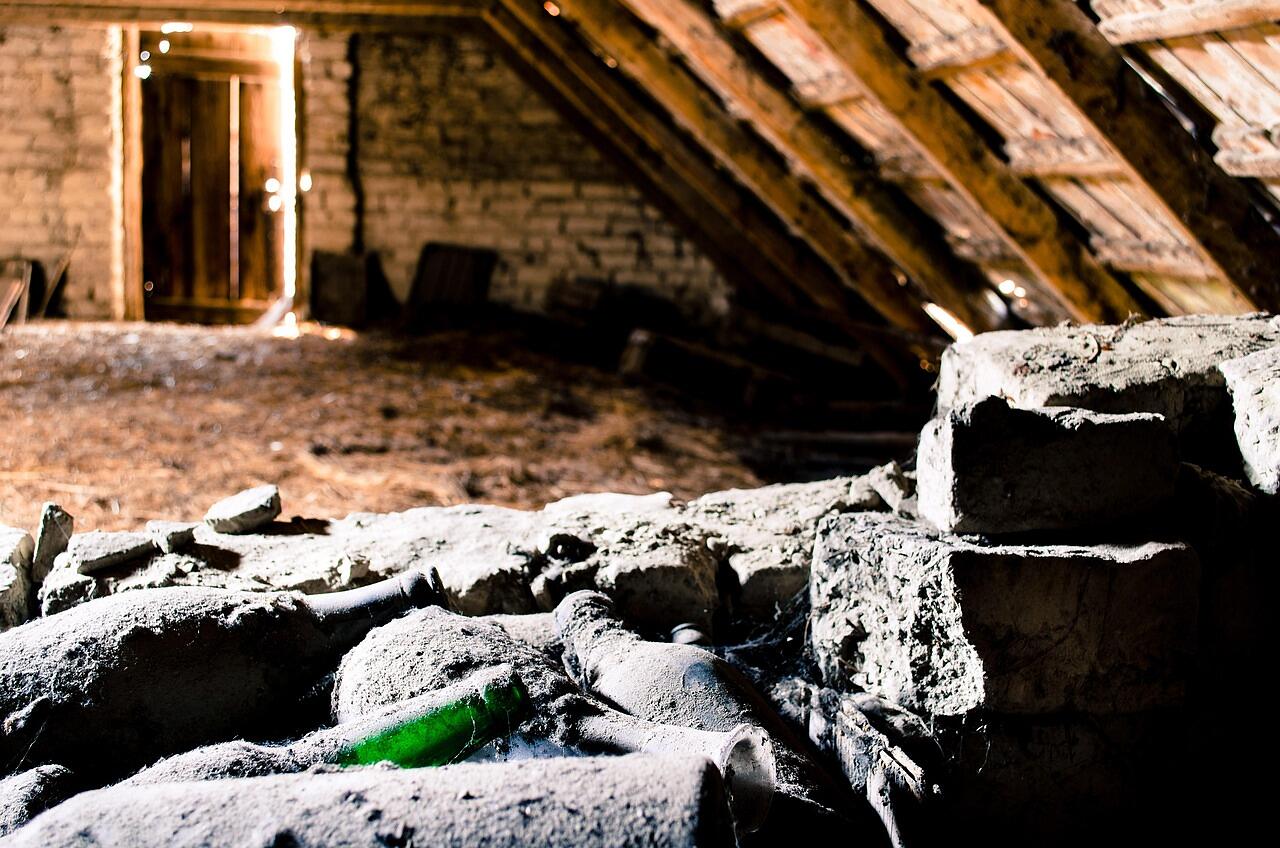
What to expect
The visit runs in the same order on every attic cleanup and decontamination job, so you know what is coming before the truck arrives.
- Respirator and disposable suit worn for the removal stage
- Floors and the hatch area covered before material comes down
- Vacuum hose run from a truck or the garage through the hatch
- Contaminated insulation bagged and hauled the same day
- Photographs of the attic before and after the work
Why Tampa homeowners book attic cleanup through us
Cleanup priced as its own line, after the sealing
Every quote we route separates trapping, exclusion and attic cleanup, with the square footage written on the page. You see what the attic work costs on its own, you can compare it with another bid on the same scope, and you can choose to do the insulation now or later. The cleanup is scheduled after the roofline is sealed and the traps have gone quiet, so the attic is treated once and stays clean.
National attic cleanup and decontamination band: $600 to $2,500 (HomeGuide 2026)
The health talk is the accurate one
The respirator and suit are for droppings dust, fiberglass and ammonia, which is contamination practice for any attic full of animal waste. Florida's hantavirus reservoir is the outdoor cotton rat, and most US cases are western, so nobody attending your attic will sell you cleanup on that scare. The reasons to do the work are ordinary: dust from dried droppings, bacteria in wet insulation, mites left in nest material, and scent trails that invite the next rat. They are enough.
CDC: rodent diseases spread directly through urine, droppings, saliva and bites, and indirectly through fleas, ticks and mites
FDACS-licensed contractors on every job
Rodent trapping in a Florida structure for hire needs at least an FDACS Limited Commercial Wildlife Management certificate, and pesticide use or a general pest business needs an FDACS Commercial Structural Pest Control license with a certified operator. Every contractor we route holds the credential the job needs. You are encouraged to confirm it through the FDACS lookup and to ask for proof of insurance before anyone goes into the attic, and a contractor who hesitates at either request is one to pass on.
FDACS Limited Commercial Wildlife Management certificate or Commercial Structural Pest Control license, checkable on the FDACS lookup
What Reddit Says About Attic Cleanup in Tampa
The most repeated advice about attic work in the homeowner threads is to get more than one bid for the same scope and to insist on an itemized quote. People post numbers for jobs described almost identically that range from under two thousand dollars to tens of thousands, and the recurring question underneath is whether they are being taken advantage of. The answer the threads settle on is that a single bundled figure cannot be judged, and that cleanup, insulation, trapping and sealing need to be separate lines before anyone can say whether a price is fair.
The red flags people warn each other about are consistent. A plan built on poison with no sealing is the first, because the dead-in-the-wall smell that follows is one of the most common secondary complaints in the corpus. Trapping with no sealing is the second, described as harvesting rats indefinitely. On the cleanup side, people are wary of companies that push full insulation replacement without showing them the contamination, and equally wary of companies that trap and leave the attic untouched. Long monitoring contracts folded into a removal price come up often, with monthly figures quoted that were never explained at the sale.
The questions homeowners tell each other to ask are direct: what exactly is included and what is a separate line item, will you clean up and decontaminate or only trap, how many follow-up visits are included, and what happens if the animals come back. Several threads mention that rodent mites can persist in nest material after the rats are gone, which is one reason the cleanup matters to people beyond the smell. An inspection fee just to get a bid is a real barrier for many posters, which is why a free inspection is worth having.
Those are the questions the free inspection is built to answer, with the attic photographed and each part of the job priced on its own line.
A typical attic cleanup call in Tampa
The situation: A common call comes from a mid-century house in South Tampa with live oaks over the roof. The scratching started in a November cool snap, a trapping company caught several rats over three weeks, and the scratching stopped. Two months later the ammonia smell on warm afternoons has become hard to ignore, and the homeowner has climbed to the hatch and seen droppings along every joist and insulation flattened into tunnels.
What gets done: The inspection finds the trapping company sealed nothing. Soffit returns and a gap at a gable vent are closed with steel mesh and traps go back in for a week to confirm the attic is empty. Then the cleanup: the blown insulation is vacuumed out through the hatch on two early mornings, droppings are cleared from the joists and the top of the ductwork, the framing is sanitized and the urine-stained decking near the old nest gets an odor treatment. A chewed cable run found under the insulation is written up for an electrician.
How it turns out: The smell is gone within days of the treatment and the attic is ready for new insulation the following week. The homeowner has a photographed record of the attic before and after, a sealed roofline, and a written note of the wiring repair to hand to the electrician.
Attic cleanup questions from Tampa homeowners
The questions that come up most on cleanup calls, answered plainly.
Health and safety
Do I need to worry about hantavirus from the droppings in my attic?
The risk in Tampa is low and the precautions are worth taking anyway. Florida's identified hantavirus reservoir is the native cotton rat, an outdoor field species, and most US cases occur in western states. The animal in a Tampa attic is nearly always a roof rat. The respirator and suit worn during cleanup are general contamination practice for handling animal waste and disturbed fiberglass, and that is reason enough to wear them. The CDC's general position is that rodents carry many diseases spread through urine, droppings, saliva and bites, and through the fleas, ticks and mites that fed on them. Do not sweep an attic dry.
Can I clean the attic myself to save money?
Light contamination near the hatch can be handled by a careful homeowner with gloves, a respirator rated for particulates, a disposable suit and a wet-cleaning method that avoids raising dust. Anything beyond that is a different job. Removing a full attic of contaminated blown insulation needs a commercial vacuum, a hose run, bagging and disposal, and several hours in a hot attic under the roof deck. The bigger risk of doing it yourself is sequence: cleaning before the roofline is sealed means doing it again. Book the free inspection first and decide with the attic photographs in front of you.
Scope and cost
Does the cleanup include putting new insulation back?
Cleanup and insulation replacement are separate lines, and a good quote shows both. Cleanup covers removal of droppings, contaminated insulation and nests, then sanitizing and odor treatment. Replacement is priced by attic size and material, and Angi's Tampa figures put it at $1,000 to $3,000 on top of removal at $600 to $1,200. Asking for both figures together at the inspection lets you decide whether to do the insulation now or later without being surprised by a second number.
How soon after trapping can the attic be cleaned?
As soon as the traps have gone quiet for several consecutive checks and the roofline is sealed. On most Tampa jobs that is two to four weeks after the first visit. UF/IFAS advises leaving traps at least a week because roof rats are wary of new objects, and a heavy infestation can take longer to trap out. Cleaning earlier means working around live animals and risking recontamination. If the smell is severe in the meantime, a partial removal of the worst material can be done early, with the full cleanup after the attic is confirmed empty.
What happens if they come back after the cleanup?
A return after cleanup points to an opening that was missed or a seal that failed, and the exclusion warranty is what covers it. Before work starts, ask the contractor how long the exclusion warranty runs, whether it renews, and how many follow-up visits are included. A sealed attic that has been decontaminated and deodorized is far less attractive to the next rat than one still carrying scent trails, which is part of why the odor treatment matters. If activity returns, the follow-up visit finds the gap and closes it, and the cleanup itself does not need to be repeated unless there is fresh contamination.
Still have a question? Call (813) 710-4931 and ask.

Get the attic back to clean
Book a free inspection and get the attic photographed and the cleanup priced on its own line, scheduled after the roofline is sealed. The line is answered 24 hours a day.